
Monday, April 11, 2011

Sunday, March 20, 2011
Japan
When you're sick, podcasts reign.
Today I listened to the February podcast of the Food Programme, from BBC radio 4. It transported me instantly from self-pittying sniffling to Japan - pre tsunami, earth quake and nuclear emergency - where the future of Japanese food culture was being investigated. Questions such as these were posed by food writer Simon Parkes.... on an island where the bulk of the rice farmers are over the age of 70, how long will Japan be able to sustain itself? On an island where foreign ingredients are celebrated, (then improved - think kobe beef, green tea ice cream, tempura batter...) will rice always be an essential part of the diet? Can there be Japanese cuisine without rice? Will the younger generation embrace the traditions of the past? Will farmers be young again?
Then we're left with Japan today. What happened to those rice fields 10 days ago? Are the elderly farmers safe? What are they eating? What will they eat?
Wednesday, March 2, 2011
Baie qu'appelle...?
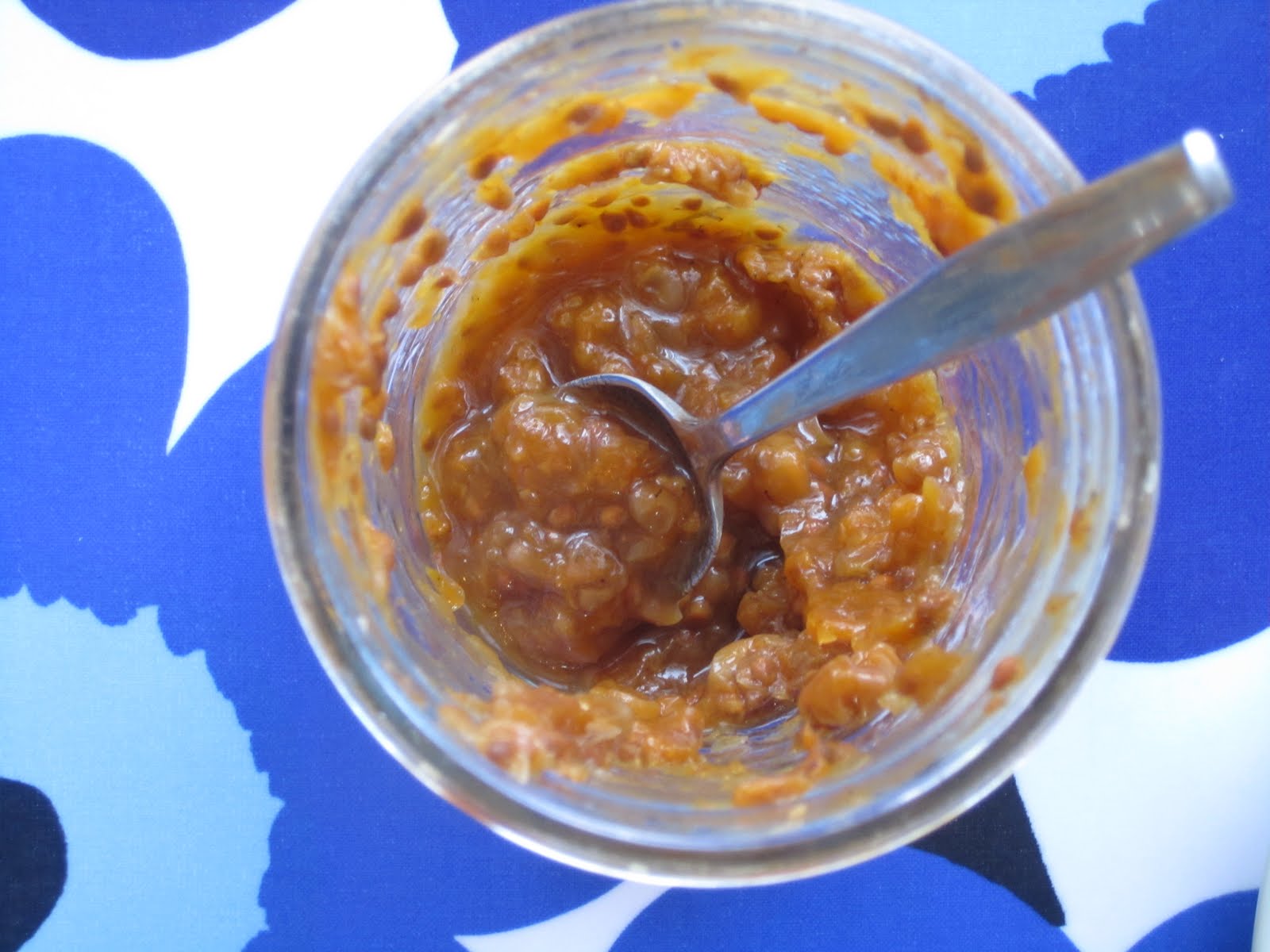
A mason jar of jam has been sitting in our fridge since the summer, its contents slowly being savoured by my husband James. He came back from a fly fishing trip in Labrador not with salmon, but with this jar of bakeapple jam, given to him by one of the fishing guides. He reveres it, cherishes it, almost cossets the contents in a way I’ve never seen a food-stuff loved before. James loves fly fishing, but he rarely will fish and tell. I usually have to piece together the details with careful open-ended questions. I’m out of my league. But this morning, as he spread the jam on his buttered toast, it hit me. The story of the jam is my link: a flavourful portal onto the boys-club river. This is what he told me:
‘We had two guides in Labrador. This first one was Mr. Knowmore, otherwise known as the Great White Hunter. He is also a machinist who makes parts for heavy machinery at the Boisey’s Bay mine. The other guide, Eric Belben, was the main analogue technician for Labrador. Now he’s retired. They're good friends. Boisey’s Bay was on strike while we were there, and the Great White Hunter didn’t want to sit around, so he offered to help guide.
We fished the Pinware – a brakish, swift river that flows through Labrador. The landscape is raw; uneven rocks and evergreens line river, and it was too wild to wade in some places. We were fishing for salmon using 9 foot 8 weight fly rods. Our flies were undertakers and black bears green butts. No skin was showing, but the black flies still drove us to insanity. We had to take the shortest, windiest pee brakes possible.
The Pinware is an open river, it’s not restricted so anyone can fish there. There are many pools, so you have to move around a lot. One pool is called the North West Shoot pool, accessible through a long walk through a low bush meadow. The Great White Hunter pointed out bakeapples growing in the field. Imagine a light-orange raspberry balancing on the end of a stalk, growing in clusters.
At the end of the week, the Great White Hunter gave me a jar of bakeapple jam. He made it himself.’
Bakeapple (Cloudberry)(Rubus Chamaemorus). 'Bakeapple', anglicized from the French, 'baie qu'appelle...' meaning, 'what is this berry called..?', is internationally known as a 'Cloudberry'. It is similar in appearance to a rather large raspberry and has what some say a distinct honey/apricot-like flavour. Others claim its unique delectableness is beyond compare. The colour is orange/yellow and grows one berry to a plant approximately 3-4" high. Bakeapples are members of the rose family having close relatives such as the raspberry, blackberry, nagoonberry, and thimbleberry. Male and female flowers grow separately with each plant growing a single white, five petalled flower from the tip of the stem. The fruit is red when unripe and turns a soft golden orange at maturity. They are generally ready for picking around mid August. Bakeapples occupy a variety of moist northern tundra and peat bog habitats. These berries are extremely rich in vitamin C and contain few calories. The juice has been used to treat hives.
Source: the Dark Tickle Company
Tuesday, December 28, 2010
December happenings
Overheard:
A friend sits in a London café on a Saturday morning in December. She watches as a father and youngish son settle into their chairs. The father sips an Americano, son a frothy hot chocolate. The father opens the Times.
“Would you like a bit of the paper?” asks the father. “Yes daddy. I’d like the bit with Heston. Let’s see what he’s cooking this week. “
Heston Blumenthal is the food writer for the London Times. He’s also the King of molecular gastronomy in the UK, acclaimed chef, recipe developer for Waitrose (fine grocers) cookbook author and owner-operator of the Fat Duck in Bray. I’ve never been; it’s impossible to get a reservation. But who needs one now? I, and apparently seven year old boys all over the world, can pick up the Times on Saturdays and bring Heston directly into our kitchens.
Heston has caused quite a stir lately. His Christmas pudding for Waitrose, complete with a whole orange nestled within, sold out immediately. Within days the puddings were being sold on ebay for £250. Heston says he doesn’t even like Christmas pudding.
But he does like chocolate. While in London recently, I found a unique chocolate tart recipe of his in the Times magazine. It’s basic shortcrust pastry on the bottom, chocolate ganache in the middle, but on top, things start to get interesting. He tosses popping candy with melted chocolate, lets it harden, then sprinkles it over to the top (with some optional gold leaf). A chocolate explosion every time to you take a bite. I’m going to try it for New Years Eve. I, and that seven year old boy, no doubt.
Seen:
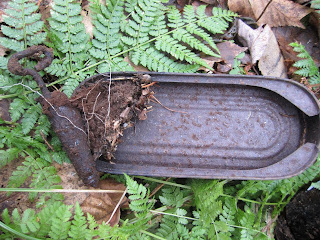
Family hike in the Acadian forest, an old growth forest along the banks of the St. Mary’s River. We walked under maple, oak, and beech trees, past alders, stepped through spongy meadows, crossed streams and crunched acorns. Hardly a coniferous in sight. The area has always been a hot spot for fly fishermen. Babe Ruth fished these banks back in the 30’s. I think we found his sardine tin.
Touched:
Chickadee’s are tame. They’ll eat from your hand if you stand very still. Their tiny claws feel like curly toothpicks on the skin. My father calls it minuscule spandex over bone. They perch, grab a sunflower seed, shell and all, then flit away.


Saturday, September 25, 2010
Word on the Street 26/09/10
National Book and Magazine Festival
Victoria Park
September 26, 2010
11-5
More specifically, at 1:30, under the Flavours of the Maritimes tent, I'll be telling a 'how to write a cookbook' tale.
Below, the long version, first published in the Coast, a long, long time ago...
The Making of a Book
by Lindsay Cameron Wilson
It all started with a book on juicing. Juice? We drank it, we loved it, we understood its benefits. But writing a book entirely devoted to juice wasn’t our intention. My colleague Pippa and I had a different idea; one that we felt would fill a huge, curiously ignored gap in the cookbook market. We put a proposal together, stuffed envelopes, licked stamps, sent it to fifteen different publishers, sat back and waited. Then we got rejected, fourteen times (idea to remain top secret in the event that one of the 14 publishers decides to change their mind). When the fifteenth proposal was returned I tore it open over the garbage can (as was the routine - discarding rejection somehow balances the pleasure/pain ratio) but paused just before it took flight. It was only a partial rejection: they liked us, but not our idea. They wanted to meet us. Could we churn out 100 juice recipes, quickly? Did we mind the small fee? Were we willing to accept their policy of not offering royalties or copyright to first time authors?
We knew we could write a cookbook together. I am a Canadian food writer and she's a New Zealand food stylist and has a nutrition background. Our collective experiences are perfect for a global cookbook market. But neither of us thought we would ever write a healthy cookbook. Pippa and I, you see, inhibit a world where aesthetics and the story behind food is paramount, while health is a distant second. Even the cookbook shop in London where we met shares the same philosophy. The succulent food books are displayed at the forefront, while books on healthy subjects are tucked behind the front door. But neither of us could harness our desire to explore unchartered flavour combinations, regardless of the calorie content or first time author stipulations. It was a mission, and we chose to accept it.
Over the following four weeks we could either be found in the market, at the computer or in our respective kitchens, aprons on and ear plugs in, stuffing roughage into our shiny Breville juicers. This model is loved for its external waste receptacle and wide feed tube, but it sounds like a 747 about to take flight.
Once the juices were blended, I would take a sip and record my thoughts. If it passed the test, it was poured into a zip lock bag for my husband to try. Then I'd give Pippa a call. This is where our co-authorship was essential. Who else could possibly understand that a juiced leek, despite its powerful detoxifying qualities, can burn your nose hairs? Who else wants to hear that their co-author had an equally adventurous day discovering the powerful laxative effect juiced pears and prunes had on their digestive system? What about the shared elation of discovering how delicious juiced lychees with a touch of rosewater could be?
Our juice testing coincided with the advent of winter. My flat was cold and damp. I wore the same juice stained sweats every day. I only left the house to buy ingredients. I couldn’t get a comb through my passion fruit pulp encrusted hair. But there was no time to primp. We had a pre-Christmas deadline that we were determined to meet. Yet as our deadline grew closer and our work load increased, we remained intact. The book that had began as a flavour combining mission had blossomed into a health giving orgy of calming goodness. Our hair grew thicker. Our skin glowed. Our bodies were cleansed and energized. To be truthful, it was the 'damn you look good' comments that really kept the juices flowing right through those dark and cold December days. Thank goodness. We needed the extra fortification to get us through the January editing.
Juice! turned out to be a success, and our publishers suggested that be it turned into a series (complete with royalties!) Fueled and fortified by juice, we moved onto Ice Cream! Soup! Barbeque! Pizza! Cookies! (be sure to pronounce each title with fervor and excitement). We’ve just finished the last book in the series, Veggie! I now live inHalifax , Nova Scotia London London London
Sometimes I feel like I haven’t really left.
by Lindsay Cameron Wilson
It all started with a book on juicing. Juice? We drank it, we loved it, we understood its benefits. But writing a book entirely devoted to juice wasn’t our intention. My colleague Pippa and I had a different idea; one that we felt would fill a huge, curiously ignored gap in the cookbook market. We put a proposal together, stuffed envelopes, licked stamps, sent it to fifteen different publishers, sat back and waited. Then we got rejected, fourteen times (idea to remain top secret in the event that one of the 14 publishers decides to change their mind). When the fifteenth proposal was returned I tore it open over the garbage can (as was the routine - discarding rejection somehow balances the pleasure/pain ratio) but paused just before it took flight. It was only a partial rejection: they liked us, but not our idea. They wanted to meet us. Could we churn out 100 juice recipes, quickly? Did we mind the small fee? Were we willing to accept their policy of not offering royalties or copyright to first time authors?
We knew we could write a cookbook together. I am a Canadian food writer and she's a New Zealand food stylist and has a nutrition background. Our collective experiences are perfect for a global cookbook market. But neither of us thought we would ever write a healthy cookbook. Pippa and I, you see, inhibit a world where aesthetics and the story behind food is paramount, while health is a distant second. Even the cookbook shop in London where we met shares the same philosophy. The succulent food books are displayed at the forefront, while books on healthy subjects are tucked behind the front door. But neither of us could harness our desire to explore unchartered flavour combinations, regardless of the calorie content or first time author stipulations. It was a mission, and we chose to accept it.
Over the following four weeks we could either be found in the market, at the computer or in our respective kitchens, aprons on and ear plugs in, stuffing roughage into our shiny Breville juicers. This model is loved for its external waste receptacle and wide feed tube, but it sounds like a 747 about to take flight.
Once the juices were blended, I would take a sip and record my thoughts. If it passed the test, it was poured into a zip lock bag for my husband to try. Then I'd give Pippa a call. This is where our co-authorship was essential. Who else could possibly understand that a juiced leek, despite its powerful detoxifying qualities, can burn your nose hairs? Who else wants to hear that their co-author had an equally adventurous day discovering the powerful laxative effect juiced pears and prunes had on their digestive system? What about the shared elation of discovering how delicious juiced lychees with a touch of rosewater could be?
Our juice testing coincided with the advent of winter. My flat was cold and damp. I wore the same juice stained sweats every day. I only left the house to buy ingredients. I couldn’t get a comb through my passion fruit pulp encrusted hair. But there was no time to primp. We had a pre-Christmas deadline that we were determined to meet. Yet as our deadline grew closer and our work load increased, we remained intact. The book that had began as a flavour combining mission had blossomed into a health giving orgy of calming goodness. Our hair grew thicker. Our skin glowed. Our bodies were cleansed and energized. To be truthful, it was the 'damn you look good' comments that really kept the juices flowing right through those dark and cold December days. Thank goodness. We needed the extra fortification to get us through the January editing.
Juice! turned out to be a success, and our publishers suggested that be it turned into a series (complete with royalties!) Fueled and fortified by juice, we moved onto Ice Cream! Soup! Barbeque! Pizza! Cookies! (be sure to pronounce each title with fervor and excitement). We’ve just finished the last book in the series, Veggie! I now live in
Sometimes I feel like I haven’t really left.
Subscribe to:
Posts (Atom)